The Cut That Lets You Know Where Everyone Is
Learn how a cut shows where characters are by tracing screen direction, movement, and landmarks, so you can follow a scene without relying on dialogue.
How does a cut show where characters are before anyone says a word? Follow screen direction, landmarks, and movement from one shot to the next. Those clues can make a room legible without pausing the action to explain it.
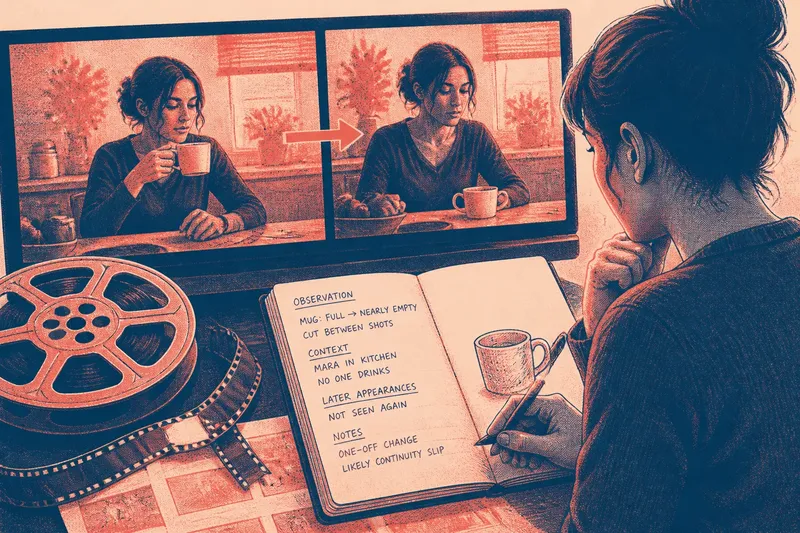
To read that visual map, replay a short entrance or exchange shot by shot. A player with pause and rewind, a notebook, and a scene with at least two people are enough. The point is not to judge whether every cut obeys a rule, but to notice what information each shot gives you.
Choose a scene with visible movement
Pick a passage in which someone changes position: crossing a room, approaching a table, turning toward another person, or entering through a doorway. A conversation in tight close-ups can work, but a doorway, piece of furniture, or clear change of position gives you more spatial clues.
Keep the passage short enough to replay without losing its shape. Start just before the movement begins and stop once the new positions are apparent. A rapid montage is harder to study at first because spatial information competes with rhythm and surprise.
Watch once at normal speed without pausing. Notice whether you can say where the people are and what changed. That first impression shows how naturally the sequence gives you a map before you inspect its construction.
Find the shot that lays out the space
Replay the opening and look for a shot that establishes the relevant geography. It could be a wide view of the room, a medium shot that includes two people and a doorway, or a moving shot that reveals the space as someone crosses it. The useful clue is not how wide the image is, but whether it connects people to recognizable landmarks.
Make a quick sketch if it helps. Mark the door, table, window, or another fixed feature, then place each person in relation to it. Simple notes such as “near the door” and “across from the table” are more useful than trying to reconstruct every camera position.
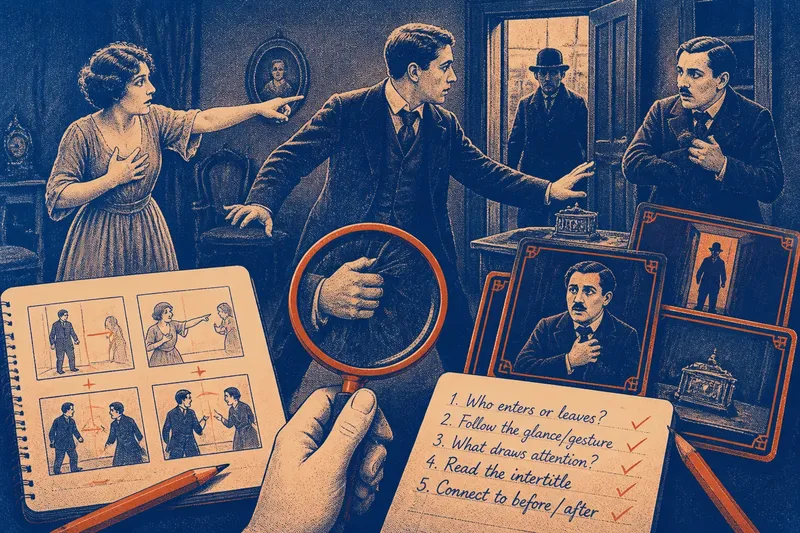
Note where people face, too. If one looks toward the left edge of the screen and another toward the right, their eyelines can imply that they face each other, even when they appear in separate shots. A close-up borrows spatial information from the earlier view rather than erasing it.
Track each person across the cuts
Replay the sequence and pause after each cut. Note who appears, which side of the frame they occupy, which way they face, and whether they have moved relative to a landmark. Compact notes such as “doorway, left side, moving right” or “table, right side, watching entrance” are enough to distinguish one view from another.
Pay attention when someone leaves the frame. Their absence does not mean they have disappeared from the scene. A person who exits at the right edge may enter the next shot from the left, continuing along the same path from a new camera position.
A glance can also direct you toward a person or object revealed in the next shot. Often the sequence shows the look first, then its target. If it shows a new person before anyone reacts, you may infer their presence from the cut and read a later glance as confirmation.
Describe each change with a plain verb: enters, crosses, turns, sits, approaches, or stops. “She crosses from the door to the chair” records visible action; “she is trying to intimidate him” proposes a meaning the images may not support.
Compare movement at the cut
Choose one action that begins in one shot and continues in the next, such as standing, opening a door, reaching for an object, or walking past a landmark. Rewind to just before the cut and watch through it at normal speed. Ask whether the action feels continuous or whether the cut deliberately interrupts it.
When movement continues across a cut, the person’s body, direction, and pace help bridge the views. A cut during a gesture can make the transition feel like one sustained event rather than a pause for a new angle.
Compare the direction of travel. If someone moves toward the right edge in one shot, the next may continue that direction and preserve the sense of forward motion. If the person appears to move left instead, the sequence may show a turn, a change in the camera’s relation to the action, or an intentional disruption. Check the landmarks and the body’s turn before deciding which explanation fits.
For a simple comparison, sketch two boxes and draw an arrow for the movement in each. If the arrows line up, the action may read as continuous in screen space. If they point in opposite directions, replay the moment and look for a visible turn or changed viewpoint; the arrows alone do not prove that a cut is mistaken.
See how the camera’s position changes
A scene may move from a shared view to separate views of the people, then return to a wider angle. The amount of visible space changes, but the people’s positions do not necessarily change. Use stable details—furniture, doors, windows, and gaze direction—to connect the views.
Notice whether the camera stays on one side of the line between two people or crosses to the other. Staying on one side often preserves their screen positions and the direction of their looks. Crossing the line can reverse those positions and make the space feel newly oriented. A film can cross intentionally; look to the surrounding shots for clues to the change.
Try this with a sequence that cuts between a person looking and the person or object in view. Identify the looker’s position and facing direction, then see whether the next shot makes the implied direction clear or leaves several locations possible. A close-up may withhold the room while a matching eyeline still helps you place the unseen subject.
Do not spend time measuring angles or reconstructing a perfect floor plan. That effort adds little unless the scene’s geography is genuinely confusing. A few dependable landmarks and the direction of movement usually explain how the edit guides your attention.
What can a cut tell you about position?
How can I tell which way someone is moving?
Track the person’s movement relative to frame edges and fixed landmarks, then compare it with the next shot. A continuing action, visible turn, or newly revealed landmark may explain a change in screen direction.
Why does a film show a wide shot before close-ups?
A wider view can establish who is near whom and where entrances or objects sit. Later close-ups can focus on faces while relying on that earlier spatial information.
Does a cut always preserve the same screen direction?
No. Direction can change when someone turns, the camera changes sides, or the film wants the space to feel disorienting. Look for other visual clues before treating a reversal as an error.
What if I cannot tell where someone is?
Rewind to the last shot that clearly placed them, then follow their exit, gaze, or movement into the next view. If the film withholds the connection, record that uncertainty instead of filling it with an assumption.
Work through one short sequence
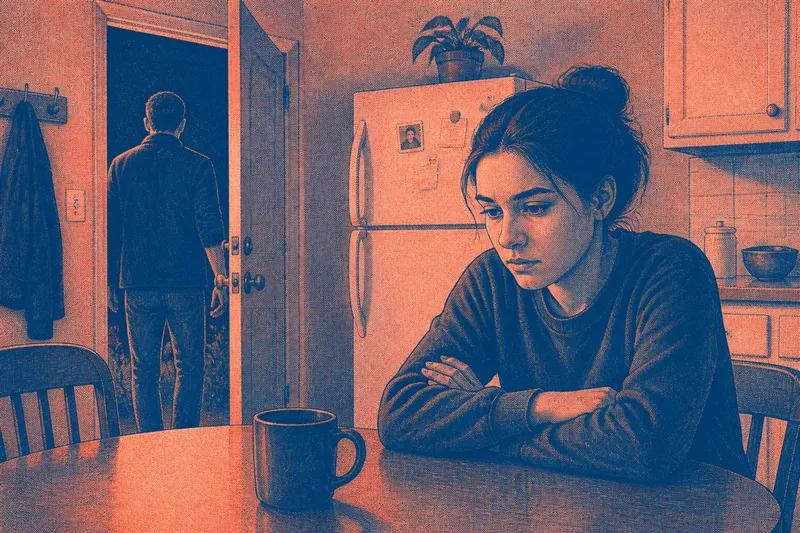
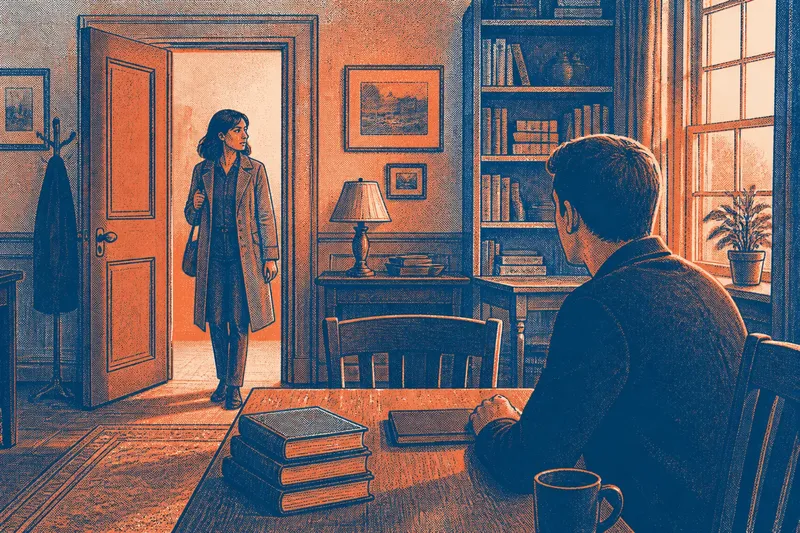
Imagine an invented scene with two people: one waits beside a kitchen table, and another enters through a visible doorway and crosses toward a chair. On the first viewing, you note that the doorway sits at the left of the room and the table near the center. A replay reveals that the entrant moves from left to right, then continues that crossing in a closer shot.
Your notes now place the waiting person beside the table and the entrant at the door. The closer view carries the entrant’s movement forward, while the waiting person’s glance points toward them. The resulting account is specific: one person waits, the other enters from the left and crosses toward the chair, drawing the first person’s attention.
This reading does not claim to know why either person acts or assume that every offscreen area has been mapped. It records what the cuts make clear and leaves open what they do not.
Separate clear geography from intended uncertainty
Ask whether you were confused about a person’s location or simply unsure what they would do next. Those are different experiences. A film can make a room easy to picture while keeping a character’s intentions mysterious; it can also obscure the room to make an entrance or confrontation feel unstable.
If your notes disagree with your first impression, identify the cut that changed your understanding. A later wide view may reveal that someone stood farther from the door than you thought, or an eyeline may have led you to place someone offscreen. Naming the source of uncertainty is more useful than calling the whole sequence unclear.
When you watch another scene, ask how a cut shows where characters are by finding the establishing view, following movement, and checking landmarks after changes in angle. Spatial editing is easiest to miss when the action feels clear; replaying a single transition can reveal how the shots keep the map in your head.