Music, Room Tone, or Silence: What Should Lead a Quiet Scene?
Choose music, room tone, or silence for a quiet scene by deciding whether viewers should focus on a character, a place, or a charged pause.
Should music, room tone, or silence lead a quiet scene? For a quiet scene, choose based on where you want viewers’ attention to settle: on a character’s inner life, on the place around them, or on the pause itself. Each choice shapes stillness differently.
Use music when a character’s inner life should lead
Music can make a quiet scene feel private, even when a character is in a crowded room. A restrained melody, a low sustained note, or a few widely spaced piano tones can guide viewers toward emotion the character does not express in dialogue.
That guidance carries a risk. If music spells out sadness, dread, or tenderness too firmly, viewers may spend less time reading the character’s face and more time accepting the score’s instruction. Music fits when the scene needs an emotional undercurrent that behavior alone cannot convey clearly.
Consider what the cue asks viewers to feel and whether the performance already communicates that feeling. A character holding back tears may need only a small musical presence; if the actor’s expression is already clear, leaving the moment unscored may preserve more ambiguity.
Use room tone when the place should stay present
Room tone is the quiet, continuous sound of an environment: ventilation, distant traffic, a refrigerator’s hum, or the soft wash of a room’s acoustics. It keeps a scene rooted in a physical place without asking viewers to follow a melody or a conspicuous effect.
Choose room tone when location shapes the meaning of the pause. A kitchen is not emotionally neutral if the refrigerator keeps humming after an argument; an empty station feels different when a train can be heard far off. These details let the setting remain active while the characters do little.
Room tone also supports naturalistic performances. Small changes in breath, clothing, or a chair shifting can stand out against a stable background without making the whole scene feel artificially mute. Viewers can stay close to the person while still sensing the space around them.
Use silence when the pause itself should lead
Silence is not simply the absence of sound. In a film, it is a deliberate reduction or removal of sounds viewers expect to hear. That contrast can make a pause feel exposed, suspended, or startlingly intimate.
Silence fits when the gap between actions matters more than the room’s texture or a character’s emotional cue. It can hold a look after a question, give a decision room to register, or make an ordinary gesture feel newly significant. The effect depends on what the scene establishes before the sound falls away.
Use silence selectively. If every quiet moment becomes a dramatic vacuum, silence loses force and can make the world feel disconnected from the image. A brief, purposeful withdrawal is often clearer than an extended stretch that removes every trace of the setting.
Match the sound choice to the scene’s main attention
Ask one question as you consider the scene: what should viewers notice first? The answer offers a clear starting point for choosing among music, room tone, and silence.
- Choose music if the character’s unspoken feeling should guide interpretation; if the performance already makes that feeling clear, keep the moment unscored or use a subtler cue.
- Choose room tone if the setting’s presence or atmosphere should remain audible; if the location adds nothing to the pause, reduce the ambience and let another sound lead.
- Choose silence if a pause, hesitation, or missing expected sound should carry weight; if removing the sound disconnects the image from its setting, retain a faint environmental bed.
- Check dialogue clarity if music or ambience masks a line; if words become hard to follow, lower or thin the competing track.
- Check the timing of the cue if it arrives before a revealing look; if it tells viewers what to feel too soon, delay its entrance or leave the look exposed.
- Check the scene’s established sound if a sudden drop seems arbitrary; if the contrast has no clear purpose, preserve the sound pattern or make the change coincide with a meaningful action.
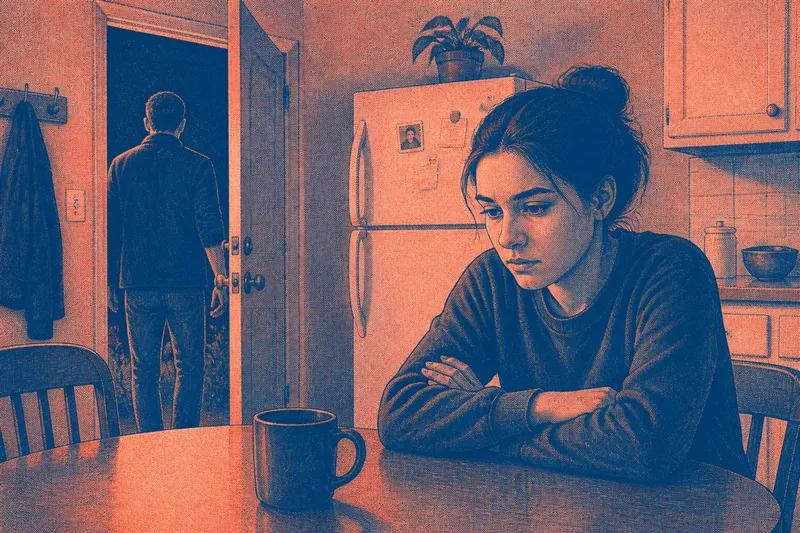
Say you are shaping an invented scene in which a daughter sits alone at a kitchen table after her father leaves. The starting elements are a refrigerator hum, her still expression, and the sound of the door closing. If the intended focus is suppressed hurt, add a faint, restrained cue after the door closes; the expected result is that viewers attend more to her face, though the cue may narrow the scene’s ambiguity. If the kitchen’s ordinary emptiness matters more, keep the hum and omit music; the room stays present without spelling out her feeling. If the held moment after the door closes is central, reduce the hum and other background sounds; the pause becomes more exposed, at the tradeoff of making the setting feel less naturalistic.
It is not worth layering a musical cue over every environmental detail just to make a quiet scene feel busy. Competing signals can blur its focus. Pick the leading sound, then keep the others quiet enough to support it.
Small production choices can change the balance
A sound choice is not only a matter of adding or removing a track. Its level, timing, and texture affect how strongly it directs attention. A low room hum can fade beneath dialogue, then become noticeable when the character stops speaking; a musical cue can enter after a glance, allowing the expression to arrive first.
Listen for whether the sound occupies the same emotional space as the image. Bright, busy room tone beneath a still performance can create friction, useful if the character feels out of place. If the intention is calm immersion, a closer match may keep viewers from wondering whether the contrast signals something deliberate.
For practical sound work, the source recording and mix matter. Room tone should resemble the space depicted, while added music should leave dialogue and important small sounds intelligible. Follow the recording equipment’s and software’s instructions for their controls and formats; the scene’s artistic decision remains separate from those technical details.
Which sound choice fits the moment?
Can room tone make a scene feel emotional?
Yes. A familiar environmental sound can make a character’s isolation, comfort, or discomfort more vivid without naming the feeling. Its emotional effect comes from how the place and performance relate.
Does silence mean there should be no sound at all?
Not necessarily. A film may reduce music and background sound while retaining breath or another close detail, so viewers still hear the body in the space. What matters is the deliberate contrast with the sound the scene led them to expect.
Should every quiet scene have music?
No. Music is useful when an emotional undercurrent needs emphasis, but it can crowd a performance or soften a pause that should stay unresolved. Let the scene’s main focus decide whether a cue earns its place.
Let the first sound point toward the intended reading
To choose among music, room tone, and silence for a quiet scene, identify the attention you want to lead: inward toward a character, outward toward a place, or onto the pause. Then listen with that choice in mind. If the sound draws attention elsewhere, adjust its presence or let a different element take the lead.
The leading sound does not need to be the loudest. A faint hum can make a room feel consequential, while a nearly absent score can still color a face. What matters is which detail reaches viewers first and what it invites them to notice next.