One Scene, Three Watches: A Film Club Plan for Shared Viewing
Use this three-watch film-club plan to give every viewer a distinct way into one scene and build a discussion from specific, shared observations.
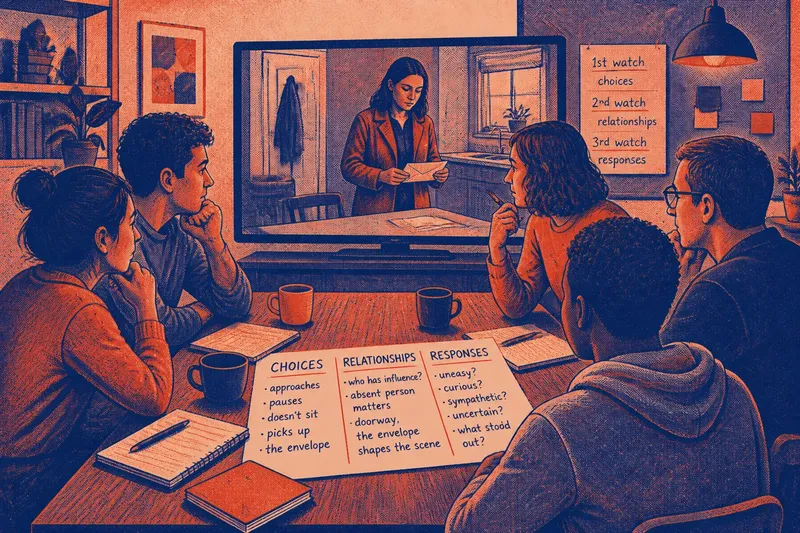
How do you keep a film-club discussion open when one scene brings out sharply different reactions? A three-watch film-club plan gives the group three distinct ways to encounter the same passage: through a character’s choices, through the scene’s changing relationships, and through each viewer’s response. The point is not to reach one verdict; it is to make room for several well-grounded accounts.
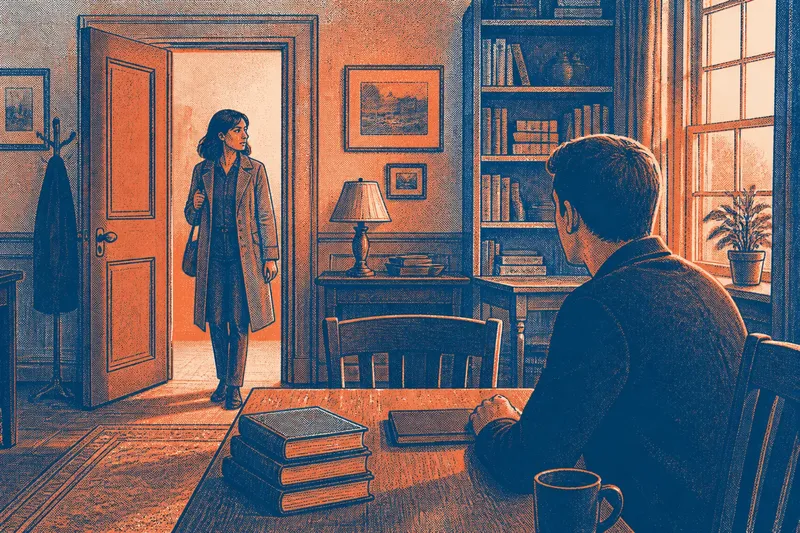
Imagine a hypothetical group of five friends discussing a kitchen scene from a film they already know. A woman enters, sets down a damp coat, and finds an envelope on the table. The group will return to the scene, but each viewing has a different social purpose: establish a shared account, compare how the moment shifts, then connect those shifts to personal responses.
Give the scene a clear beginning and a clear change
Choose a self-contained passage where something changes: a character arrives, a conversation turns, or a decision becomes visible. Keep it short enough that everyone can hold its shape in mind, but substantial enough to include a shift in behavior or relationships.
For the invented gathering, the host picks the moment from the woman’s entrance to the instant she lifts the envelope. The group agrees on those visible landmarks before starting, so everyone is discussing the same event rather than searching for a favorite detail.
A television or laptop and a way to replay the passage are enough. A shared note with three headings—choices, relationships, responses—can keep the conversation on course. It is not worth stopping after every gesture or insisting that everyone make the same interpretation.
Use the first watch to establish what the characters choose
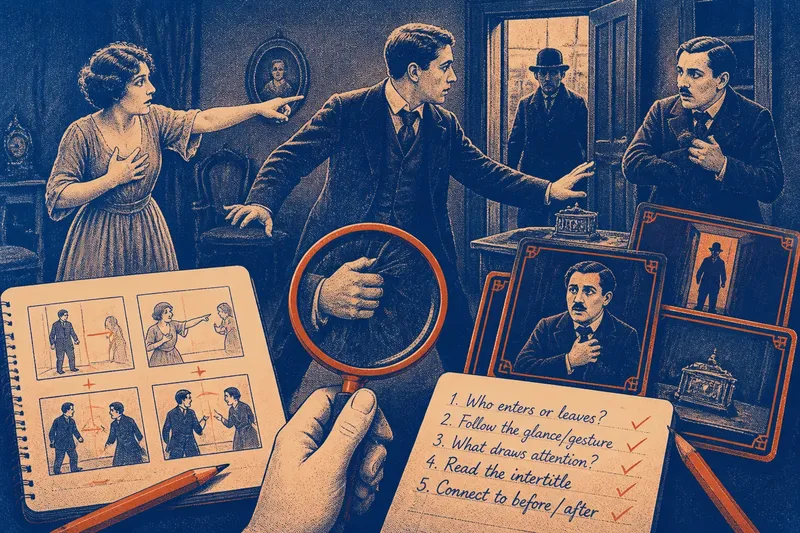
Ask each person to follow decisions and changes in behavior, not to explain what a character must be thinking. Who approaches, retreats, speaks, waits, or handles an object? These actions give the group a common starting point without turning the scene into a plot quiz.
In the imagined kitchen scene, the group agrees that the woman enters, leaves her coat near the door, pauses at the envelope, and picks it up. One viewer notices she does not sit; another notices she keeps her back to the doorway. Those details differ, but both help describe how she moves through the moment.
A useful prompt is, “What choice changed the scene?” If someone answers, “She knows the letter is bad news,” ask what action prompted that thought. The interpretation can stay; the group simply makes its footing visible.
Use the second watch to compare relationships
On the next viewing, follow how the scene positions people in relation to one another, including anyone who is absent but felt in the room. Notice who has space, who waits, who controls the pace, and whether a character’s behavior changes when another person enters or speaks.
In the hypothetical kitchen scene, the woman is alone, but the doorway and envelope suggest connections beyond the frame. One viewer sees her pause as a sign that the person who left the envelope matters to her. Another thinks the pause is about the decision to open it. The group can compare those readings by asking what each one explains about her movement and attention.
Try asking, “Who seems to have influence here, and what makes it seem that way?” Influence need not mean authority: a silent character, an object, or an absent person can shape what happens. Keep the answer tied to the scene rather than treating a single gesture as proof of a hidden story.
Use the third watch to make room for different responses
For the final viewing, invite each person to notice their own response: a moment of tension, curiosity, sympathy, impatience, or uncertainty. Then ask what in the scene brought that response forward. This shifts the discussion from “What does it mean?” to “What did I experience, and what might have shaped it?”
In the invented gathering, one viewer feels uneasy when the woman leaves her coat by the door, while another feels curious when she pauses over the envelope. A third is unsure whether the scene is private or expectant. Each response becomes a starting point for comparison, not a claim that everyone ought to feel the same thing.
It can help to offer a choice: “What held your attention, or what did you find difficult to read?” A person who prefers to listen can pass, and no one needs to supply a polished film analysis. A brief, honest reaction is enough to move the conversation forward.
What should the host ask after each viewing?
How can the host keep interpretation from becoming a debate?
Ask what in the scene supports a reading, then invite another account of the same detail. The goal is to understand how viewers reached different responses, not to declare a winner.
What if someone remembers the action differently?
Return to the agreed passage and describe the disputed moment plainly. If the group still sees it differently, record both accounts and continue without making agreement a condition of discussion.
How can quieter viewers join in?
Offer a low-pressure choice: share one observation, name a reaction, or pass for now. A short written note can also give someone time to find words before the group talks.
Does everyone need to watch the scene three times?
No. The three viewings are prompts, not a rule, and the group can stop when the discussion has enough material. If replaying the passage becomes tedious, move on to the conversation.
Let the group hold more than one reading
In the imagined gathering, the first pass gives the group a sequence of choices, the second opens questions about relationships, and the third makes different reactions discussable. The envelope remains unexplained, but the viewers have more precise reasons for their impressions.
One person reads the pause as dread; another sees hesitation about opening someone else’s mail. Someone else wonders whether leaving the coat by the door signals a quick return or a planned departure. The host can ask what each reading accounts for and where it leaves room for doubt.
Keep observations and interpretations distinct without ranking one above the other. “She pauses before picking up the envelope” describes an action; “she fears what it contains” offers a reading. The distinction gives the group a useful way to disagree while respecting what each viewer noticed.
Adapt the plan to the way the group meets
For an in-person club, pause between viewings and let people speak in any order. For an online gathering, the host can share the same bounded passage, then invite each person to describe one choice, relationship, or response. If playback is not synchronized, use the agreed start and end landmarks so the discussion still refers to the same moment.
This three-watch film-club plan works best as an invitation, not a performance. A group can use all three perspectives, skip one, or let a strong conversation take its own path. The useful closing question is simple: what part of the scene now feels different because someone else noticed it?